

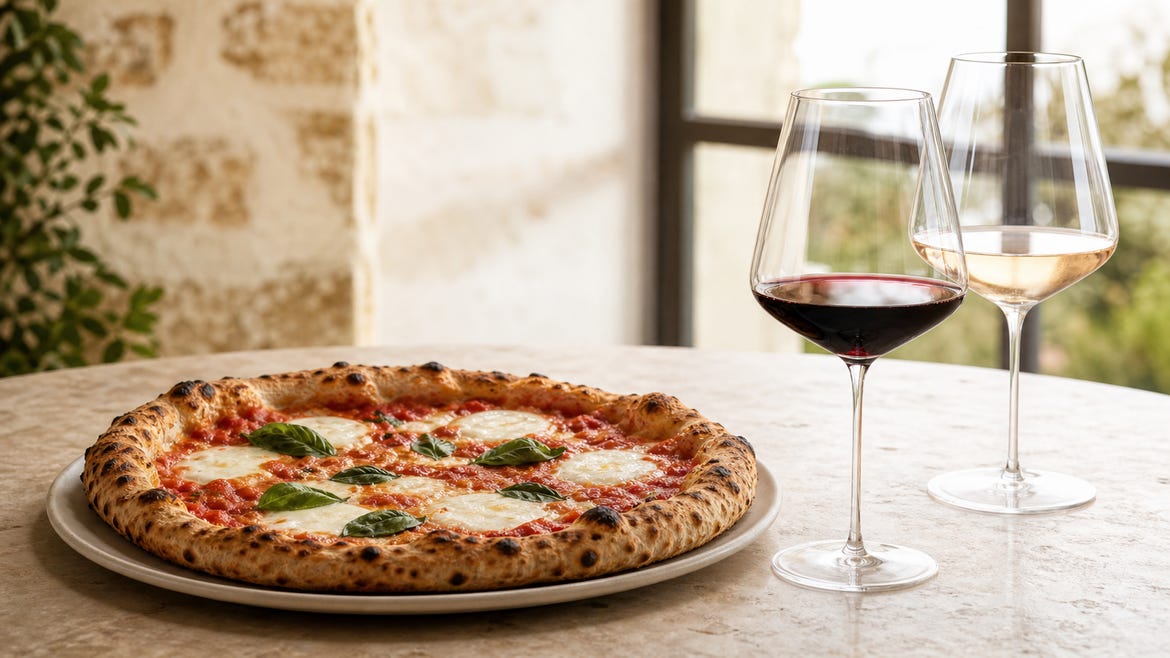
Which Wine Goes with Pizza? The Best Pairings for Every Topping
From Margherita to pizza Diavola: discover the right red, white and sparkling wines for your favourite pizza.
Pizza and wine are a wonderful match when acidity, fruit, spice and toppings work together. A heavy red can overwhelm a light Margherita, while a delicate wine quickly disappears next to spicy salami or lots of cheese. The good news is that you do not need a complicated rulebook. A few simple principles will help you find the right wine for every pizza.
As a guide, the more powerful, salty or spicy the topping, the more structure and fruit the wine can bring. Tomato sauce needs freshness, cheese loves fruit and acidity, and with chilli a juicy wine that is not too high in alcohol is usually the most enjoyable.
The key rule: acidity meets tomato
Tomatoes have natural acidity. Very soft, low-acid reds can therefore taste tired or heavy with pizza. Fresh reds with lively acidity pick up the tomato sauce and keep the palate moving. A dry rosé or fresh white can work beautifully too, especially with a light topping.
The wine category for pizza and pasta is a useful starting point. To compare styles, open two or three different wines and notice how acidity, fruit and cheese change with every bite.
Which wine goes with which pizza?
| Pizza | Wine style | Why it works |
|---|---|---|
| Margherita | fresh red, rosé or light white | acidity and fruit complement tomato and mozzarella |
| Salami or Diavola | juicy, fruit-forward red | fruit softens salt and chilli |
| Prosciutto and mushrooms | medium-bodied red or richer white | spice and creaminess need structure |
| Quattro Formaggi | fresh white or delicate rosé | acidity balances fat and intense cheese |
| Vegetable pizza | rosé, white or light red | freshness lets herbs and roasted flavours shine |
| Tuna or seafood pizza | dry white or sparkling wine | freshness suits fish and salty flavours |
Margherita: simple and fresh
The classic Margherita with tomato, mozzarella and basil does not need a powerful wine. A fresh, light red is often ideal: its acidity matches the tomato and its red fruit picks up the sauce. A dry rosé or fresh white is also excellent when the mozzarella is mild and the pizza is lightly topped.
Salami, Diavola and spicy pizza
Salami brings salt, fat and spice; Diavola adds heat. This is where a juicy, fruit-driven wine earns its place. Very high alcohol and firm tannin can make chilli feel hotter. Choose a round, not overly heavy red with ripe berry fruit instead.
Fruit-forward Barbera can be excellent with spicy salami. A dry Lambrusco is another exciting option: its fruit and gentle fizz refresh the palate between bites.
Prosciutto, mushrooms and vegetables
Prosciutto and mushrooms make pizza more savoury and earthy. A medium-bodied red with cherry, herbs and good acidity is usually a better choice than a heavy, sweet style. The same applies to grilled courgette, aubergine or peppers.
With green vegetables, herbs or a mild topping, white wine and rosé are great alternatives. Keep the wine dry and fresh so it stays lively next to olive oil and cheese.
Quattro Formaggi and creamy toppings
Four cheeses bring fat, salt and intense aromas. A very tannic red may taste hard or bitter next to them. Fresh white wines, dry rosé and lighter reds usually work better: their acidity cuts through the creaminess and keeps the cheese expressive rather than heavy.
With blue cheese, a little more fruit or gentle sweetness can be welcome. The important thing is that the wine is not completely overwhelmed by the cheese.
Fish and seafood pizza
Dry white wines are especially good with tuna, anchovies, prawns or mussels. Fresh acidity and mineral notes complement salt and fish without covering them. A dry sparkling wine is also a brilliant choice, especially with a light pizza, herbs or lemon zest.
Italian grape varieties for pizza
Italy offers many varieties that work naturally with pizza. Fruity Montepulciano brings dark fruit and soft structure to salami, ham and rich meat toppings. Barbera stays fresher and is therefore excellent with tomato sauce. Light, dry sparkling wines are perfect for an easy aperitivo style.
Origin alone is not the deciding factor. An Austrian or German wine can be just as good with pizza if its freshness and intensity match the toppings.
Common pizza-pairing mistakes
- Too much alcohol: it can make chilli heat feel even stronger.
- Too little acidity: a soft wine may taste flat beside tomato.
- Too much tannin: salty cheese can make the wine feel hard.
- Wine that is too sweet: the pizza can seem heavy and sticky.
- Looking only at the topping: sauce, cheese, herbs and chilli matter too.
Serve the wine slightly chilled and take the first sip with the pizza itself. That is the quickest way to see whether freshness, fruit and spice fit together. And if you cannot decide, open two styles. Pizza is relaxed, sociable and perfect for discovering new pairings.
Latest reviews
-
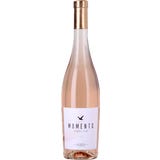
Markus Huber Moments Rosé 2025 Bio, 0,75 l
- New, dry rosé wine
- Made from Pinot Noir and Zweigelt
- Light, fruity, delicately mineral
-
-
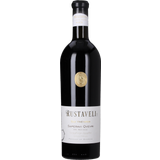
Shilda Winery Rustaveli - Saperavi Qvevri 2022, 0,75 l
- Traditional Georgian red wine
- Saperavi grape variety from the amphora
- Clean, dark, powerful, unique
-
-

Weingut Langmann Blanc de Blanc Reserve Extra Brut g.U., 0,75 l
- 100% Chardonnay from steep slopes
- Base wine matured in 500-litre oak barrels
- Long bottle ageing
-
-
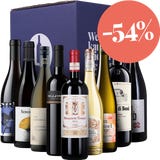
9wines Case 9Weine Limited Birthday Box, 9 x 0.75 l
- 4 white wines and 5 red wines, including a few rare finds
- Limited to 999 sets; maximum of 2 sets per order
- A one-off offer to mark our 11th anniversary
-






Magazine Articles:
Discover 9wines Online:
-
Austria: Free standard delivery from € 49,90
-
We operate in a
climate-conscious manner. -
Free
returns Secure payments
with SSL encryption technology